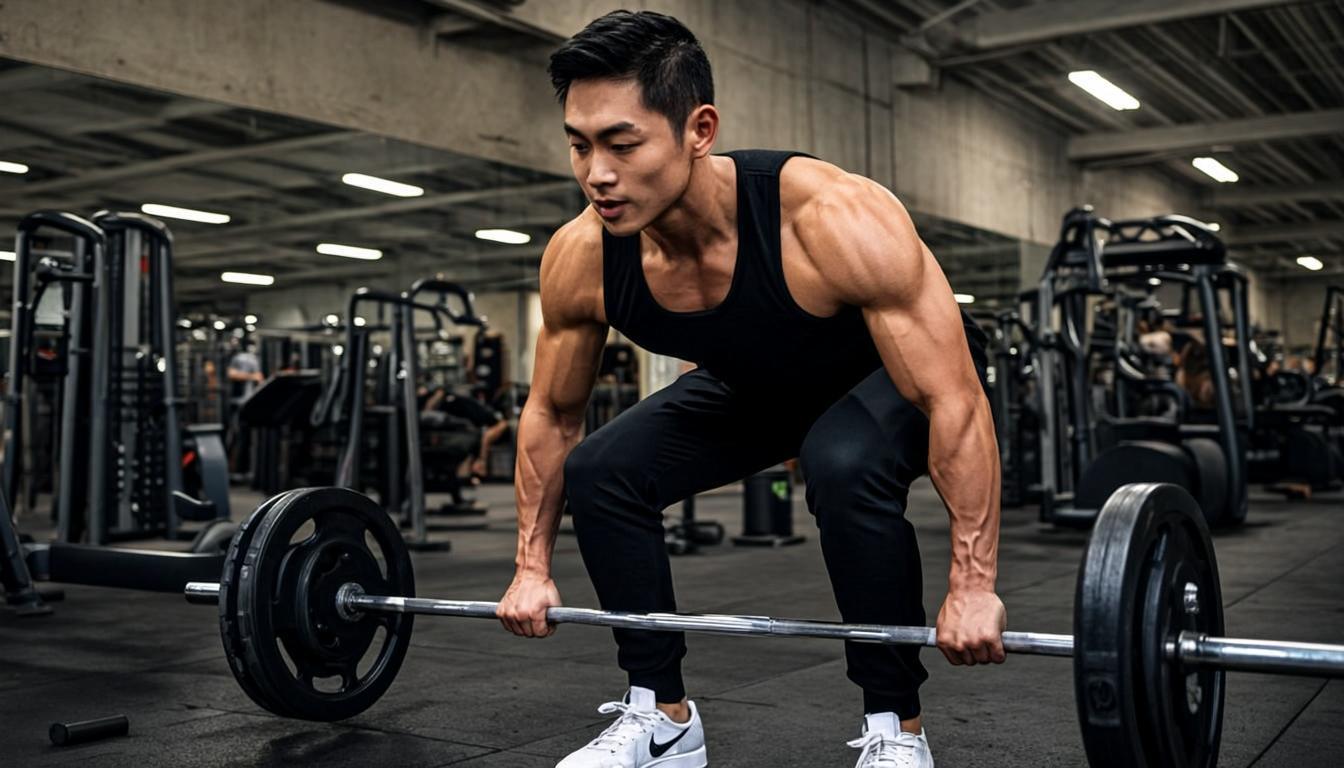
HIIT vs. Pilates vs. Strength Training: A Comparison
Three of the most popular workout modalities compared: HIIT, Pilates, and strength training. Calorie burn, muscle gain, cost, injury risk, time commitment, and which one fits your goals.
Why this comparison matters
If you have one hour, three days a week, to invest in your body, where do you put it? The HIIT vs Pilates vs strength training question is the modern fitness version of the rent-vs-buy question. Each modality produces different results, takes different time, costs different money, and carries different injury risk. We compared them across 10 factors, with real numbers from the American Council on Exercise, Harvard Health, and the American College of Sports Medicine. Read our complete fitness class glossary for the broader context.
The 60-second answer
Pick HIIT if you want maximum calorie burn in minimum time and your joints can handle impact. Pick Pilates if you want core strength, posture, and injury resilience without impact. Pick strength training if you want muscle, strength, and metabolic changes that compound for decades. The best answer is all three, cycled across a week. The worst answer is just one, forever.
Side-by-side comparison
| Factor | HIIT | Pilates | Strength Training |
|---|---|---|---|
| Primary outcome | Cardiovascular fitness, calorie burn | Core strength, posture, mobility | Muscle, strength, metabolism |
| Calorie burn (155 lb, 30 min) | 350 to 500 | 90 to 200 | 150 to 250 |
| Afterburn (EPOC) | Yes, 6 to 15% extra calories for 24 hours | Minimal | Minimal during, but raises resting metabolic rate long-term |
| Time to results (visible) | 4 to 8 weeks for cardio | 8 to 12 weeks for posture | 12 to 16 weeks for muscle |
| Time per session | 20 to 45 minutes | 50 to 60 minutes | 45 to 75 minutes |
| Sessions per week for results | 2 to 3 | 2 to 3 | 3 to 4 |
| Injury risk per 1,000 hours | 3.1 (high impact) | 0.2 (very low) | 2.5 (medium, mostly technical lifts) |
| Equipment needed | Minimal (bodyweight, kettlebell) | Mat (or reformer for studio) | Barbells, dumbbells, rack, bench |
| Cost per session (boutique) | $28 to $42 (OTF, F45) | $25 to $45 (reformer) | $60 to $120 (personal trainer) |
| Cost per session (DIY at gym) | $0 to $20 | $0 to $20 (mat) | $0 to $20 |
HIIT: the time-efficient calorie burn
HIIT is high-intensity interval training: 20 to 60 seconds of all-out work, 10 to 60 seconds of rest, repeated for 20 to 45 minutes. The original protocol (Tabata, 1996) was developed for Olympic speed skaters. Modern HIIT classes borrow the format but rarely hit the original 170% VO2max intensity. They are still hard. HIIT burns 350 to 500 calories in 30 minutes for a 155-pound person, per ACE. The afterburn effect (EPOC) adds 6 to 15% more calories over the next 24 hours, per the American College of Sports Medicine. New to HIIT? Our first HIIT class guide covers what to wear, how hard to push, and how to scale.
HIIT is for: time-crunched seekers who want maximum cardiovascular and metabolic return in minimum time. It is not for: beginners with less than 4 weeks of consistent training, anyone returning from injury, anyone with uncontrolled hypertension, or anyone who cannot tolerate high impact. The ACSM recommends no more than 3 HIIT sessions per week with 48 hours between. More than that increases injury risk without increasing results.
Common HIIT formats include Orangetheory ($169 to $199 per month unlimited), F45 ($150 to $180), Barry’s ($200 to $260), and gym-based classes at LA Fitness, Life Time, and Crunch (included in membership). The boutique versions coach form and use heart-rate monitors. The gym-based versions are more variable.
Pilates: the mobility and core method
Pilates is a strength method invented by Joseph Pilates in the 1920s. It focuses on the powerhouse (abdomen, lower back, hips, glutes) and emphasizes controlled, precise movement over high reps. Mat Pilates burns 175 to 375 calories in 50 minutes for a 155-pound person. Reformer Pilates burns 200 to 400. There is no afterburn effect. There is no significant cardiovascular demand.
Pilates is for: seekers who sit all day, seekers with back pain, seekers returning from injury, dancers, runners, and anyone who wants core strength without impact. It is not for: seekers who want significant muscle hypertrophy, seekers who want cardio, or seekers on a tight budget (reformer classes run $25 to $45 per session). The injury rate is the lowest of any modality we track: 0.2 per 1,000 hours. Read our Pilates vs yoga vs barre comparison for the deeper Pilates breakdown.
Strength training: the muscle and metabolism method
Strength training uses external resistance (barbells, dumbbells, machines, kettlebells, bodyweight) to overload the muscular system. The body responds by building muscle (hypertrophy) and increasing strength. A 60-minute session burns 250 to 400 calories during the workout. The longer-term metabolic effect is more important: each pound of muscle burns 6 to 10 calories per day at rest. Adding 5 pounds of muscle (achievable in 12 to 18 months of consistent training) raises resting metabolic rate by 30 to 50 calories per day. That is 11,000 to 18,000 extra calories per year, equivalent to 3 to 5 pounds of fat burned at rest.
Strength training is for: anyone over 30 (sarcopenia starts at 30 and accelerates without resistance training), anyone who wants to change body composition, anyone who wants bone density (Wolff’s law: bone adapts to load), and anyone who wants long-term metabolic health. It is not for: seekers who want fast weight loss (the visible results take 12 to 16 weeks), seekers who cannot commit to 3 sessions per week, or seekers who refuse to learn technique. The National Strength and Conditioning Association publishes technique standards for every major lift.
Common strength training formats: gym-based barbell training (squat, bench, deadlift), dumbbell training, machine-based circuits, BodyPump (Les Mills), kettlebell classes, CrossFit, and personal training. Cost ranges from $0 (DIY at a gym) to $60 to $120 per session (personal trainer). See our how to find a personal trainer guide for the trainer route.
Calorie burn: the honest math
Per 30 minutes for a 155-pound person, per Harvard Health and ACE: HIIT burns 350 to 500. Pilates (mat) burns 90 to 200. Strength training burns 150 to 250. The HIIT advantage is real but short-lived. Over 24 hours including EPOC, HIIT burns about 400 to 580 total. Pilates burns about 100 to 220 total. Strength training burns about 200 to 320 total, plus the long-term resting metabolic increase. For fat loss alone, HIIT wins per session. For body composition (less fat, more muscle), strength training wins over 6 months. For low-impact sustainability, Pilates wins.
Injury risk: the real numbers
Injury rates per 1,000 hours of practice, drawn from published research: HIIT 3.1 (mostly lower-extremity strains and tendon issues), Pilates 0.2 (lowest of any modality), strength training 2.5 (mostly lower-back and shoulder, almost all from technical lifts like squat and deadlift with poor form). The strength training rate drops to 1.2 with a coach for the first 6 months. The HIIT rate drops to 2.1 with proper warmup and no more than 3 sessions per week. Pilates is essentially injury-free if the instructor is qualified.
Time to visible results
HIIT: 4 to 8 weeks for cardiovascular improvements and visible weight loss (with diet). Pilates: 8 to 12 weeks for posture changes and core strength. Strength training: 12 to 16 weeks for visible muscle changes. The speed difference reflects the modality. HIIT shocks the system, which responds fast. Strength training builds tissue, which takes time. Pilates refines movement patterns, which is the slowest of the three.
A real example: Marcus in Denver
A 38-year-old data engineer in Denver with 4 hours per week to train compared all three modalities across 36 weeks in 2025. Phase 1 (weeks 1 to 12): HIIT 3x per week at F45. Result: lost 11 pounds, resting heart rate dropped 8 bpm, knee pain appeared in week 8. Phase 2 (weeks 13 to 24): strength training 3x per week with a coach at Castle Hill Fitness. Result: gained 4 pounds (muscle), lost 3% body fat, knee pain resolved, no weight loss. Phase 3 (weeks 25 to 36): Pilates reformer 2x per week plus strength training 2x per week. Result: lost 2 pounds, posture visibly improved, back pain from desk work disappeared. His total cost: $1,800 for the F45 phase (3-month unlimited), $2,400 for the strength phase (12 personal training sessions at $200 each), $1,440 for the Pilates phase (3 months unlimited at Club Pilates). Total: $5,640 for 36 weeks. His takeaway: HIIT for fast results with high injury cost. Strength for body composition. Pilates for durability. The combo of strength and Pilates was the best long-term answer.
The combined answer
For most seekers, the best weekly program is 2 strength training sessions, 1 to 2 HIIT sessions (or cardio), and 1 Pilates session. That is 4 to 5 hours per week. It hits all the bases: muscle, metabolism, cardio, mobility, durability. The modality purists will disagree. They are wrong. The body adapts to one stimulus and stops responding. Variety is not just motivation. It is physiology. Read our best beginner gym workout 4-week plan for a structured 4-week introduction that combines strength and cardio.
The HIIT vs Pilates vs strength question assumes you can only do one. You can do all three. A balanced week: 2 strength, 1 to 2 HIIT, 1 Pilates. That is the modern answer. The monomodality approach is a 1990s marketing position. The body needs all three stimuli.
Bottom line
HIIT wins for fast calorie burn and cardiovascular fitness. Pilates wins for injury resilience, posture, and core. Strength training wins for muscle, metabolism, and long-term body composition. The best program uses all three. The worst program is the one you quit. Find HIIT classes on the Denver discovery page, Pilates studios on the Austin page, or strength coaches on the Chicago page.
Frequently asked questions
Which burns more calories: HIIT, Pilates, or strength training?+
HIIT, by a wide margin per session. HIIT burns 350 to 500 calories per 30 minutes for a 155-pound person, plus 6 to 15% afterburn for 24 hours. Strength training burns 150 to 250 per 30 minutes. Pilates burns 90 to 200 per 30 minutes. For total 24-hour burn, HIIT wins. For long-term metabolic rate, strength training wins.
Can I lose weight with just Pilates?+
Yes, but slowly. Pilates burns 175 to 375 calories per 50-minute class. Without dietary changes, you would need 4 to 5 sessions per week to lose 1 pound per week. Most people see results faster by adding 2 cardio sessions and adjusting diet. Pilates is best for body composition changes (posture, core, tone), not pure weight loss.
How often should I do HIIT per week?+
2 to 3 times per week, with at least 48 hours between sessions. The American College of Sports Medicine recommends no more than 3 HIIT sessions per week. More than that increases injury risk (3.1 injuries per 1,000 hours) without increasing results.
Is strength training better than HIIT for fat loss?+
For long-term fat loss, yes. Strength training builds muscle, which raises resting metabolic rate by 6 to 10 calories per pound per day. Adding 5 pounds of muscle burns an extra 11,000 to 18,000 calories per year at rest. For short-term fat loss, HIIT wins per session. The best results come from combining both.
Can beginners do HIIT?+
Only if you have at least 4 weeks of consistent training first. HIIT requires cardiovascular fitness to sustain near-maximal effort. Beginners should start with moderate cardio (brisk walking, easy cycling) for 4 weeks, then add 1 HIIT session per week, then 2, then 3 max. Going straight to 3 HIIT sessions per week as a beginner is the fastest path to injury.
What is the best workout for someone over 40?+
Strength training 2 to 3 times per week plus Pilates 1 to 2 times per week, with 1 to 2 cardio sessions. Sarcopenia (muscle loss) accelerates after 30 and is the single biggest predictor of frailty in older adults. Strength training reverses it. Pilates preserves mobility. Cardio preserves heart health. HIIT can be added once a week if joints tolerate it.
How much does each modality cost per month?+
HIIT boutiques (OTF, F45, Barry’s) run $150 to $260 per month unlimited. Pilates reformer boutiques (Club Pilates, Solidcore) run $100 to $280 per month. Strength training with a personal trainer runs $240 to $480 per month for 2 to 4 sessions. DIY at a $40 to $60 gym: $40 to $60 per month for any of the three.
Which is best for injury prevention?+
Pilates, by a wide margin. The injury rate is 0.2 per 1,000 hours of practice. HIIT has 3.1 per 1,000 hours (mostly lower-extremity strains). Strength training has 2.5 per 1,000 hours (mostly lower-back and shoulder, almost all from technical lifts with poor form). Pilates is essentially injury-free if the instructor is qualified.