What to Wear to the Gym: The Complete Outfit Guide by Workout Type
Outfit-by-outfit rules for 9 workout types: strength, yoga, Pilates mat, Pilates reformer, spin, HIIT, CrossFit, boxing, barre, swimming. Real cost per outfit. Footwear rules.
The general rule: fitted, moisture-wicking, no cotton, no jeans
Gym clothing has one job: let you move without restriction, manage sweat, and not damage equipment. The general rule across all workout types: fitted clothes (loose catches on equipment and falls over your face in inversions), moisture-wicking synthetic blends (polyester, nylon, spandex) instead of cotton (cotton absorbs sweat and gets heavy), no jeans (seams damage vinyl benches and restrict movement), no open shoes (sandals and flip-flops are a safety violation on the gym floor). The exceptions are workout-specific and covered below. Read our complete fitness class glossary for what each workout actually involves, then come back here for what to wear to it. The two guides work together. If you only read one section of this article, read the footwear section at the end. Wrong footwear is the most common beginner mistake and the most common cause of injury. Footwear mistakes take 6 weeks to heal from. The right shoes take 5 minutes to buy.
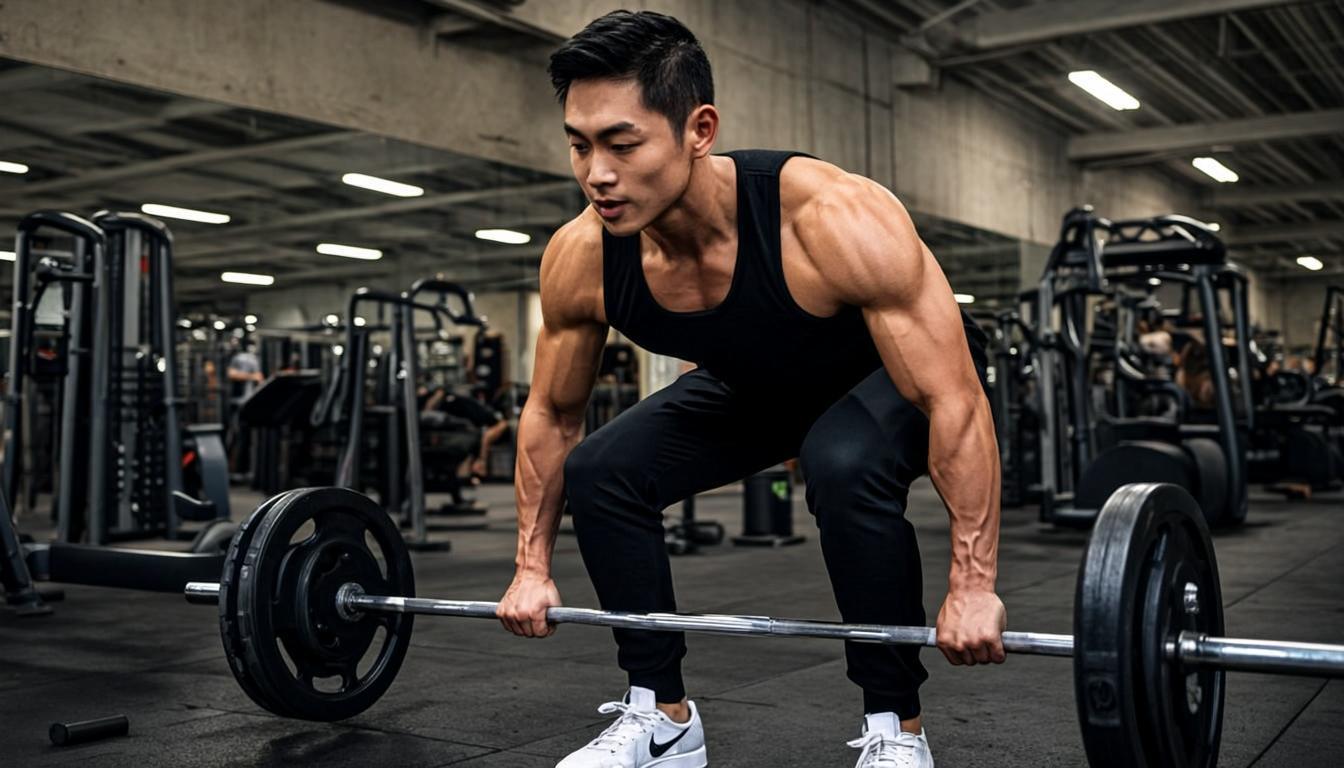
General gym workout (strength training)
Cross-trainers or lifting shoes. Fitted tee or tank. Fitted shorts or joggers. Sports bra (medium support for women). Socks (synthetic blend, not cotton). The shoes matter most. Cross-trainers (Nike Metcon, Reebok Nano, NOBULL Trainer) have flat, firm soles that stabilize a squat. Running shoes have cushioned heels that compress under a barbell and roll your ankle on lateral cuts. Lifting shoes (Nike Romaleos, Adidas Adipower) have an elevated heel that improves squat depth and are worth it only if you compete in Olympic lifting. A fitted tee or tank lets you move without fabric catching on the bar. Fitted shorts or joggers let the coach see your knee position in a squat. Skip the cotton hoodie. It absorbs sweat, gets heavy, and restricts the shoulders in overhead work. Cost: a full strength-training outfit runs $120 to $250 if you buy mid-tier brands. Target and Old Navy sell serviceable alternatives for $50 to $90 total. The outfit does not need to be expensive. It needs to fit and not restrict.
Yoga
Fitted tank or tee (you go upside down in downward dog). Fitted leggings or fitted shorts. Optional grip socks. Sports bra with medium support. No belts, no zippers, no dangling jewelry. Yoga is barefoot at most studios, so footwear does not matter. Skip cotton, which absorbs sweat and gets heavy in hot classes. Synthetic blends wick and stretch. A light layer for the warmup and for savasana, since studios run cool and you will get cold during final relaxation. Cost: $60 to $120 for a full mid-tier outfit. The Lululemon Align legging ($98) is the most-recommended yoga pant on the internet, but Target All in Motion leggings ($25) do the same job for a quarter of the price. The outfit does not matter as much as the mat. Buy a good mat ($40 to $90) and a mid-tier outfit. Read our first yoga class guide for the studio etiquette rules that go with the outfit.
Pilates mat
Fitted clothes. The instructor needs to see your spine, pelvis, and ribcage to correct your form. Loose clothes hide everything. Fitted leggings or capris. Fitted tank or fitted tee. Grip socks (mandatory at most studios, $12 to $25 a pair). Sports bra with medium support. No zippers, no buttons, no dangling jewelry. No belts. No hoodies. Skip perfume. The studio is a small enclosed space and the deep breathing of Pilates amplifies smells. Capris or leggings beat shorts because mat work involves lying down and shorts ride up. The right outfit lets the instructor see your alignment from across the room, which is the whole point of the format. Cost: $80 to $150 for a full mid-tier outfit. Grip socks are the only specialty item. Buy them at the studio before your first class if you do not have them. Do not wear outdoor shoes into the studio. Take them off at the entrance. Pilates mat is done in grip socks or barefoot, depending on the studio.
Pilates reformer
Same as mat Pilates (fitted clothes, grip socks, sports bra) with one critical addition: no zippers, no buttons, no jewelry that dangles, no metal snaps. The reformer carriage is a padded surface that costs $4,000 to $7,000 to replace. Zippers and buttons scratch the padding. Studios will turn you away if you wear them. Pull-on leggings, pull-on tops, no hardware. Lena, 32, in Chicago, made this mistake at her first reformer class at Pure Pilates Chicago. She wore a sports bra with a metal hook closure. The instructor noticed during setup, asked her to swap it for a pullover top from the studio lost-and-found bin, and the class went on. Most studios have spare tops for this exact situation. Do not be the person who needs the spare. Skip the leggings with the cute zip pocket. The zipper is a problem. The pocket is not. Cost: same as mat Pilates, $80 to $150 for a full mid-tier outfit. Read our first Pilates class guide for the full reformer etiquette rules.
Spin / indoor cycling
Padded cycling shorts (the seat hurts for the first 5 classes, then it does not). Moisture-wicking top. Stiff-soled shoes (SPD cleats or flat pedals with a strap). Sports bra with high support. A small towel. Water bottle. The padded shorts are non-negotiable for your first 5 classes. The bike seat is hard and narrow, and your sitz bones are not used to it. Padded shorts ($40 to $90) take the edge off. By class 6 you will not need them. Stiff-soled shoes transfer power to the pedal and protect your foot. Running shoes flex too much and cause foot numbness. Most spin studios (SoulCycle, CycleBar, Equinox Cycling) rent SPD cleat shoes for $3 to $5. Some studios use flat pedals with toe cages that work with any stiff-soled shoe. Call ahead and ask. Skip loose shorts. They catch on the saddle. Skip loose tees. They fall forward when you stand up on the bike. Cost: $100 to $180 for a full mid-tier spin outfit, plus $40 to $90 for padded shorts (only needed for the first 5 classes) and $80 to $140 for SPD shoes if your studio requires them. Read our what to expect at your first spin class guide for the bike setup rules that go with the outfit.
HIIT and Boot Camp
Cross-trainers with lateral support (you do side-to-side movements). Fitted top. Fitted shorts or capris. Sports bra with high support. Synthetic blend socks. A small towel. The shoes matter most for HIIT. You will do box jumps, lateral skater jumps, burpees, and mountain climbers. Running shoes do not have the lateral support for these movements and your ankle will roll. Cross-trainers (Nike Metcon, Reebok Nano, NOBULL Trainer, Under Armour TriBase) have a wider base and firmer sole. $90 to $140 a pair. The outfit is the same as strength training: fitted, moisture-wicking, no cotton. HIIT produces a lot of sweat. Cotton gets heavy. Synthetic blends wick. Skip the long pants. HIIT classes run hot and you will overheat. Shorts or capris are better. Cost: $120 to $200 for a full mid-tier HIIT outfit. The cross-trainers are the biggest line item. Bring a heart-rate monitor if you have one. HIIT coaches cue by zone, and the monitor makes the zones real.
CrossFit
Cross-trainers or lifters. Fitted clothes. Long socks for rope climbs. Hand protection (grips or gloves) for bar work. Sports bra with high support. Cross-trainers (Nike Metcon, Reebok Nano, NOBULL Trainer) are the default CrossFit shoe. They handle the mix of lifting, jumping, and short runs that CrossFit throws at you. Lifters (Nike Romaleos, Adidas Adipower) are for the heavy lifting days. Most members own both. Long socks for rope climbs prevent shin burn. They cost $10 to $20 a pair and live in your gym bag. Hand protection: gymnastics grips ($25 to $40) or weightlifting gloves ($20 to $35) prevent the torn-callus problem that hits everyone in their first 60 days. Skip the lifting belt for the first 6 months. You do not need it yet. Skip the knee sleeves unless you have a knee history. The outfit should be fitted enough to not catch on the barbell but loose enough to allow full range of motion. Compression shorts or fitted joggers work. Cost: $150 to $280 for a full mid-tier CrossFit outfit, including grips and socks. The cross-trainers are the biggest line item at $90 to $140. Read our first CrossFit class guide for the rest of the survival kit. Our what to bring to the gym checklist covers the 12 essentials for a stress-free first visit.
Boxing
Hand wraps. Bag gloves (12 to 16 oz). Mouthguard if sparring. Fitted top. Shorts. Cross-trainers. Hand wraps ($8 to $15) protect your knuckles and wrists from the impact of hitting the bag. They are mandatory at every boxing gym. Bag gloves ($40 to $120) protect your hands and the bag. 12-oz gloves for people under 140 pounds, 14-oz for 140 to 180, 16-oz for over 180. Mouthguard ($15 custom-molded, $300 dentist-fitted) is required if you spar. Fitted top and shorts (not long pants, boxing footwork needs free hips). Cross-trainers (not running shoes, the lateral movement in boxing footwork rolls ankles in running shoes). Cost: $100 to $250 for the outfit including wraps and gloves. Most boxing gyms rent gloves for $5 if you do not want to buy before your first class. The wraps are personal gear and you should own your own. Priya, 34, in Austin, spent $340 on the wrong Pilates outfit (loose tee, no grip socks, leggings with a zipper pocket) before learning the rules. The same seeker later spent $85 on the right boxing outfit (wraps, rented gloves, fitted top she already owned) and had a much better first class. The lesson: read the rules before you shop. If you have never boxed before, read our first boxing class guide before you walk in.
Barre
Grip socks (mandatory at most studios). Fitted clothes (the instructor needs to see your alignment). Leggings. Tank or fitted tee. Sports bra with light to medium support. Barre is low-impact and the moves are small, so high-impact support is not needed. The grip socks are non-negotiable. Barre is done on a hardwood floor and the movements include plies, releves, and thigh work that would slip in bare feet or regular socks. Grip socks ($12 to $25 a pair) have rubber dots on the sole. Buy them at the studio before your first class if you do not have them. Fitted clothes are required because the instructor corrects alignment by looking at your spine, pelvis, knees, and feet. Loose clothes hide everything. Capris or leggings (no shorts, the barre work involves lying down and shorts ride up). Cost: $80 to $150 for a full mid-tier barre outfit. Grip socks are the only specialty item.
Swimming
Competition swimsuit (not beachwear). Goggles. Cap (required at most pools). Towel. Flip-flops for the deck. The swimsuit is the biggest mistake beginners make. A beach swimsuit (target bikini, board shorts) is loose, has ties that catch on lane lines, and creates drag. A competition swimsuit (Speedo, Tyr, Arena) is fitted, hydrodynamic, and stays put. Women: a one-piece competition suit ($40 to $80). Men: jammers (knee-length fitted shorts, $30 to $60) or briefs ($25 to $50). Goggles ($15 to $40) protect your eyes from chlorine and let you see. Swedish goggles (small, no foam, $10) are the cheapest and most customizable. Cap ($10 silicone, $5 latex) keeps hair out of your face and is required at most public pools for hygiene. Towel. Flip-flops for the deck (the deck is gross, do not go barefoot). Cost: $80 to $180 for a full swim outfit including suit, goggles, cap, and flip-flops. A mesh swim bag ($15) keeps wet gear separate from your dry clothes on the way home.
Footwear rules: the one type you should never wear
Never wear running shoes for lifting. This is the one rule that applies across almost every workout type except running itself. Running shoes have cushioned heels designed to absorb impact. That cushion compresses under a barbell and destabilizes your squat. It rolls your ankle on lateral cuts in HIIT. It makes Olympic lifting impossible. The only workouts where running shoes are appropriate are running, walking, and treadmill cardio. For everything else, wear cross-trainers ($90 to $140), lifting shoes ($150 to $220), or flat-soled shoes (Converse, Vans, $50 to $80). The cross-trainer is the most versatile shoe in fitness. Buy one pair and they handle strength training, HIIT, CrossFit, and boxing. Skip the running shoe for everything except running. Cost of getting it wrong: rolled ankles, knee pain, lower back pain, and a squat that never progresses past 135 pounds. Cost of getting it right: $90 to $140 and 3 years of use. The footwear section is the most important section of this guide. Read it twice before you shop. Use FITT Finder Austin or your own city page to find gyms and studios with the right class for your outfit.
Frequently asked questions
Can I wear running shoes to the gym?+
For treadmill and elliptical work, yes. For strength training, HIIT, CrossFit, and boxing, no. Running shoes have cushioned heels that compress under a barbell and roll your ankle on lateral movements. Buy a pair of cross-trainers ($90 to $140) for everything except running itself.
Can I wear cotton t-shirts to the gym?+
For a light workout, yes. For anything that produces real sweat, no. Cotton absorbs sweat, gets heavy, and sticks to your skin. Synthetic blends (polyester, nylon, spandex) wick moisture and stay light. Most gym clothing is synthetic for this reason.
Do I need grip socks for Pilates and barre?+
Yes, at most studios. Grip socks have rubber dots on the sole that prevent slipping on the mat and on the reformer carriage. They cost $12 to $25 a pair. Some studios require them for hygiene and will not let you into class without them. Buy them at the front desk before your first class.
What should I wear to my first spin class?+
Padded cycling shorts (the seat hurts for the first 5 classes), a moisture-wicking top, stiff-soled shoes (SPD cleats or flat pedals with a strap), a high-support sports bra, a small towel, and water. Most studios rent SPD shoes for $3 to $5. Skip loose shorts and loose tees.
Can I wear jeans to the gym?+
No. Jeans restrict movement, chafe, and the seams damage vinyl benches. Most gyms have a dress code that prohibits denim and open-toe shoes. Wear fitted athletic pants or shorts. Cotton sweats are acceptable for warmup only.
How much does a full gym outfit cost?+
$80 to $280 depending on the workout type. Yoga and barre are cheapest at $60 to $150. Strength training and HIIT run $120 to $200. CrossFit and boxing run $150 to $280 with specialty gear. The footwear is the biggest line item at $90 to $140 for cross-trainers. Target and Old Navy sell serviceable alternatives for 40 to 60% less.